Raccoon Removal in Columbus, OH | Skedaddle skip to main content
Skip to main content
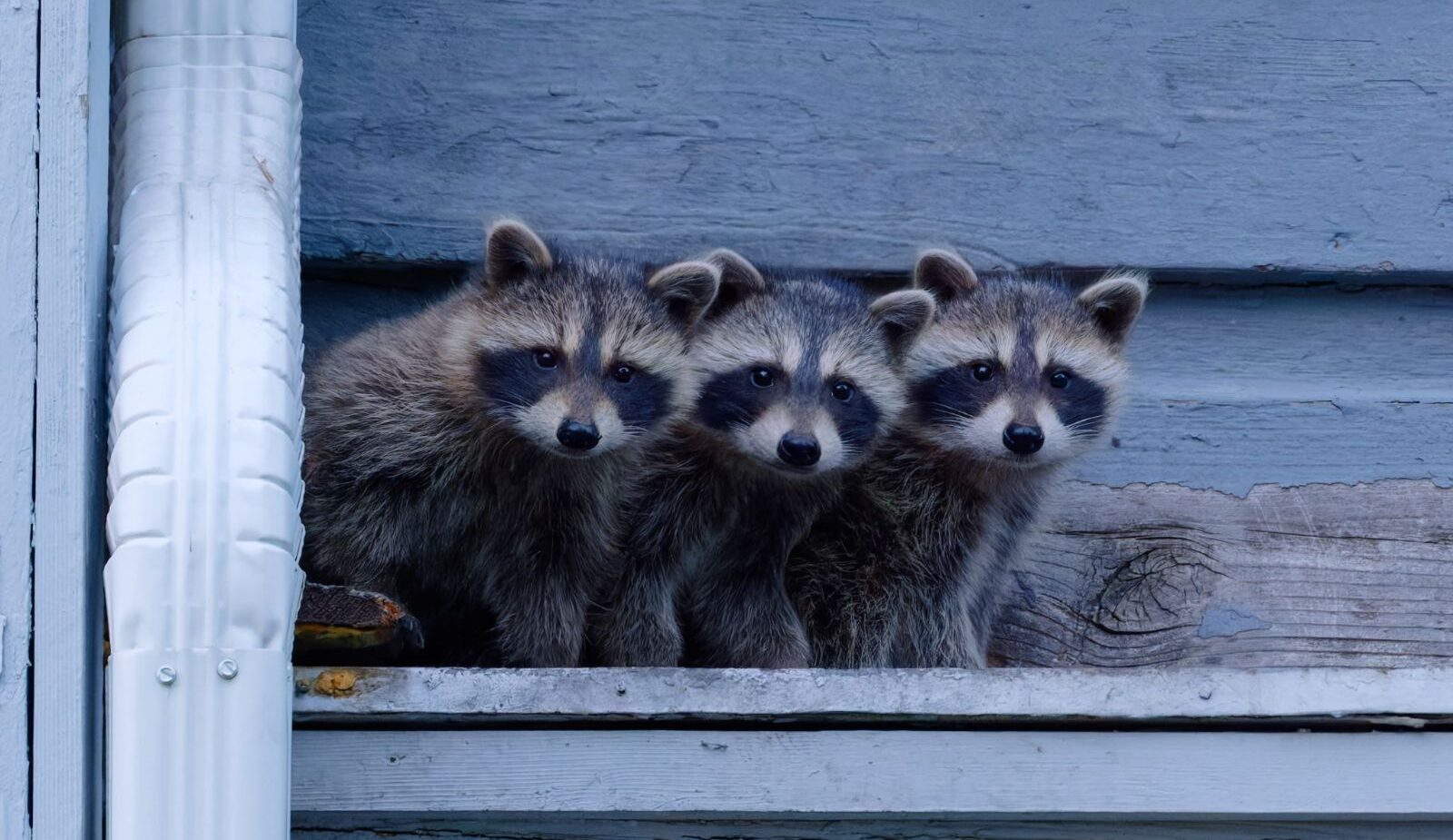
Three young raccoons on a wooden ledge beside a downspout at the edge of a roof

Columbus Raccoon Removal

Contact Us
614-662-1800

Monday–Friday: 7:30 AM–9:00 PM

Saturday: 8:00 AM–5:00 PMSunday: 10:00 AM–4:00 PM Eastern Time

COLUMBUS · HUMANE RACCOON REMOVAL

Raccoon Removal in Columbus

Serving Central Ohio since 2024.
A plan for the raccoons, the space they occupy and the openings they use.

Skedaddle Columbus provides humane raccoon removal across Central Ohio, from Columbus and Upper Arlington to Westerville, Dublin and Powell. Through late fall and winter, we inspect the den and every access point, account for the mother and any young still with her, and remove the raccoons on site. We then seal the entry points and clean the affected space, with attic restoration where needed.

BBB Accredited Business. Click for the Skedaddle Humane Wildlife Control BBB profile.

Reviewed by Bill Dowd, Founder, President & CEO. Last updated November 2026.

Why homeowners choose Skedaddle

A raccoon in the attic raises more than one question: how it got in, whether it has young with it and what happens to the space it has been using. We answer all three before any work begins.

An inspection beyond the obvious damage

We check how the raccoons got in, where they are denning and which other parts of the roofline, chimney or foundation are vulnerable. That full picture lets us plan the removal, the repairs and the cleanup together, instead of patching the one opening you can see from the yard.

Clear coverage for the exclusion work

Our exclusion work carries a lifetime guarantee on all workmanship and materials. Your written quote lists the openings we seal and keeps cleanup and attic restoration as separate items, so you know exactly what the guarantee covers.

Signs of raccoons and how they get in

You do not need to climb into the attic or onto the roof to tell us what is going on. Where you hear the activity and what you can see from the ground is a great starting point for our inspection.

Den assessment

Activity around an attic or chimney

Heavy thumping or footsteps overhead at night are often the first sign. The Ohio Division of Wildlife notes that raccoons take up residence in chimneys and attics and that uncapped chimneys make appealing den sites. Tipped trash cans can point to raccoons nearby, but we confirm whether one is actually living inside.

Entry damage

Pulled or weakened building materials

Raccoons are strong climbers that use damaged soffits, loose shingles, roof vents and wall vents to reach attic space. Overhanging tree limbs give them easy access to the roof. We find the active opening and the other weak points nearby, so one repair does not leave a second route into the same space.

Affected-area assessment

Changes inside the den area

Raccoons that settle in can leave droppings and trampled or soiled insulation and damaged wiring and ductwork. We look for latrines in particular, because raccoon roundworm eggs are passed in raccoon feces. What we find decides which materials need cleaning and whether attic restoration makes sense.

Concerned about activity overhead?

Tell us where you are hearing the activity and any damage you can see from the ground. Our inspection confirms the den, checks for young and ties the removal to the repairs and cleanup your home needs.

Understanding raccoons in Central Ohio

  • Raccoons

Raccoons are a familiar part of Central Ohio life. The Ohio Division of Wildlife reports that raccoons are found in all parts of the state and have moved into towns and cities, living almost anywhere there is food and a den for shelter. Seeing one in the yard is normal; the real question is whether it is using an opening to den inside your home.

In the wild, raccoons prefer wooded areas with big trees and water close by. Around Columbus, the river corridors, ravines and mature trees that run through so many neighborhoods put that habitat right beside homes. A tree limb over the roof or an uncapped chimney can turn a passing raccoon into a resident.

Ohio rules shape how raccoons are handled. Live-trapped raccoons may not be relocated to a new area, and Ohio's wildlife control rules require captured raccoons to stay on the property (Ohio Administrative Code 1501:31-15-03). Our approach works within that rule: we remove the raccoons on site, close the way back in and let the mother move her family to one of her other den sites.

For your home, that means we treat every occupied den as a possible family, confirm which animals are inside before closing any opening and pair the removal with the repairs and cleanup the space needs.

What to expect from a Skedaddle inspection

Our inspection covers the roofline, attic, chimney and any ground-level spaces where raccoons may den. We confirm the animal, find the den and every opening, and check for young. Then we walk you through our findings and each step we recommend and give you a written quote before any work starts.

  • Activity: We confirm raccoons are the animal involved and locate the den.
  • Access: We identify the active entry point and other weak areas that need protection.
  • Occupied spaces: We check for a mother with young and for affected insulation or other materials.
  • Work required: We explain the removal, the exclusion repairs and any cleanup or attic restoration.

Your written quote separates removal, exclusion repairs and any cleanup or attic restoration, so you can see the full scope before work starts.

Skedaddle's Three-Step Wildlife Removal Process

Step 1

Assess and Remove

We locate the den and check for young before choosing a method. When babies are present, we remove them by hand and place them in a heated reunion box near the entry point, which draws the mother out to collect them. One-way devices are used only where appropriate for the opening.

Learn more
Step 2

Clear and Clean

Once the raccoons are out, we clear droppings, nesting material and soiled insulation from the den area and decontaminate the space. Heavily damaged attics may need full restoration with new insulation; smaller areas often need targeted cleaning only.

Learn more
Step 3

Prevent and Protect

We secure the entry point and every other vulnerable opening using heavy-gauge screening and durable materials built to resist a raccoon's strong paws. Your written quote lists each protected opening covered by our lifetime guarantee on all workmanship and materials.

Learn more

Seasonal activity and removal timing

Raccoon family life shapes how we handle a den in every season. In Ohio, this year's young often stay with their mother through the fall and sometimes into winter, so a late-season den can hold more than one animal.

SeasonWhat may changeWhat it means for the homeowner
Winter(Dec–Feb) Raccoons do not truly hibernate but can sleep for days or weeks during cold weather. Mating begins in February.A quiet attic during a cold snap is not always an empty one. We confirm activity before closing any opening.
Spring(Mar–May) Mating continues through March, and young are born March to May after a 63- to 65-day pregnancy, in litters of three to seven.Any occupied den may hold a litter. We check for young before removal.
Summer(Jun–Aug) Young are weaned by the sixth or seventh week and begin traveling with their mother.Young that come and go may still return to the den, so our removal and sealing plan covers the whole family.
Fall(Sep–Nov) Young stay with their mother through the fall, and some stay through the winter.A fall den often holds a family group. We account for every animal before sealing, and fall is a practical time to close weak openings before winter.

These patterns describe raccoon biology, not a fixed removal calendar. The findings at your home set the order of the work.

A humane approach to raccoon removal

Humane removal means solving the problem without harming the family or creating new damage. A mother kept away from her young may tear apart shingles and siding to get back in, so the order of each step matters.

Locating the den before choosing the method

We decide how to remove raccoons only after we know where the den is, how many openings exist and whether young are inside. Hand removal, reunion boxes and species-specific exclusion equipment each have a role, and one-way devices are used only where appropriate for the opening.

Keeping the family together on site

We lift babies out by hand and place them in a heated reunion box lined with their own nesting material, giving the mother the chance to carry them to another den. Ohio does not allow raccoons to be relocated off the property, and our on-site approach works within that rule. Reunification is always our aim, though it cannot be promised in every case.

Cleaning the space that was occupied

We remove droppings, latrines and soiled nesting material, decontaminate the affected area and replace insulation only where it is damaged or contaminated. The CDC advises careful removal of raccoon feces because roundworm eggs become infectious over time, so we keep that work matched to what the inspection found.

Securing the building afterward

We close the entry point and other weak spots on vents, soffits, roof edges and chimneys with materials that stand up to a raccoon's paws and teeth. Our lifetime guarantee on all workmanship and materials covers the openings we seal, and if one needs attention later, we come back to inspect and repair it.

Get answers about the animals and the attic

Every raccoon problem starts at a different opening. Book an inspection and we will map the den, any young, the openings that need protection and the cleanup your home needs, then explain the work before it begins.

Where this service is currently available

Our Columbus team provides raccoon removal in Clintonville, Columbus, Delaware, Dublin, Franklinton, Gahanna, Grove City, Groveport, Hilliard, New Albany, Obetz, Pataskala, Pickerington, Powell, Reynoldsburg, Sunbury, Upper Arlington, Westerville, Whitehall and Worthington. If your home is nearby but outside these communities, call with your address and we will confirm availability.

Raccoon dens can sit high in a chimney or attic or low beneath a deck, porch or shed. When you book, tell us where you hear or see activity so we can prepare for a roofline, chimney or ground-level inspection.

Frequently asked questions about raccoon removal

Wondering how much of your home is affected? Bring your questions to the inspection, and we will connect each recommendation to what we found.

Call 614-662-1800

How much does raccoon removal cost?

Cost depends on where the den is, how many openings need sealing, whether young are present and how much cleanup or insulation work the space needs. We inspect the property first and provide a written quote that separates removal, exclusion and cleanup, so you see the full price before any work starts.

Can you remove raccoons the same day I call?

Same-day service is sometimes available, but it cannot be guaranteed. The inspection and the completion of all work may happen on different days, especially when young are inside. Call 614-662-1800 and we will explain the next available appointment and what to expect.

How do you remove raccoons humanely?

We start with an inspection that locates the den and checks for young. Babies are removed by hand and placed in a heated reunion box so the mother can retrieve them, and the raccoons stay on the property, as Ohio's rules require. We then seal the openings with durable materials, using one-way devices only where appropriate.

Which areas do you serve?

Our Columbus team serves Clintonville, Columbus, Delaware, Dublin, Franklinton, Gahanna, Grove City, Groveport, Hilliard, New Albany, Obetz, Pataskala, Pickerington, Powell, Reynoldsburg, Sunbury, Upper Arlington, Westerville, Whitehall and Worthington. If you live near these communities, call with your address and we will confirm availability.

What does the guarantee cover?

Our exclusion work comes with a lifetime guarantee on all workmanship and materials. It covers the repairs and sealed openings listed in your written quote, and if one of those repairs needs attention, we come back to inspect and fix it. A new concern on another part of the home gets its own assessment.

Is cleanup or attic restoration included?

Cleanup is part of our recommended scope whenever raccoons have soiled a space, and the quote lists it separately. Not every attic needs full restoration. Small areas may need targeted cleaning, while heavily soiled or damaged insulation may need removal and replacement. The inspection findings decide which applies to your home.

What happens if a raccoon has young in the home?

We find the young before closing any opening, because a mother separated from her babies may damage the roof trying to return. Our technicians remove the young by hand, place them in a heated reunion box near the entry and give the mother the chance to move them to another den.

What happens to droppings and contaminated materials after removal?

We remove droppings, latrines and soiled nesting material from the den area and decontaminate the surfaces. Raccoon roundworm eggs are passed in raccoon feces, so we handle indoor den cleanup with protective equipment and replace insulation where it is contaminated.

Book your raccoon inspection

Thumping overhead, a raccoon in the chimney or a den under the deck all deserve answers before the problem grows. Our Columbus team locates the den, checks for young, removes the raccoons humanely on site, seals the entry points and cleans the affected area, with attic restoration where needed. Every exclusion repair is backed by our lifetime guarantee on all workmanship and materials.

Reviewed by Bill Dowd, Founder, President & CEO. Last updated November 2026.

menu