




Proudly serving Oakville and surrounding Halton communities, Skedaddle uses a proven humane process to remove wildlife, repair damage, and protect your property for the long term.
Oakville’s mix of mature neighbourhoods, lakeside communities, growing subdivisions, and ravine and creek systems makes it a beautiful place to live, but also an attractive place for urban wildlife. Along the lakeshore, around Sixteen Mile Creek and Bronte Creek, and throughout areas with established tree canopy, raccoons, squirrels, bats, birds, and rodents can find easy access to shelter, food, and nesting space. Even newer homes are not immune.
As the city continues to grow, wildlife often adapts quickly to vents, attics, soffits, garages, and wall cavities in both residential and commercial properties. Skedaddle brings decades of humane wildlife control experience with local knowledge shaped by the town’s landscape, construction patterns, and common problem species.
Professional Humane Removal Services
Professional wildlife removal services help safely remove raccoons, squirrels, bats, birds, and rodents while addressing the damage they leave behind. Experts use humane methods, identify hidden entry points, clean contaminated areas, and prevent animals from returning, giving property owners a safer and longer-lasting solution than temporary fixes.

Wildlife Issues Homeowners Are Facing Right Now
Seasonal climate has a direct impact on how and where wildlife behaves. During colder months, animals look for warmth and protection, often moving into attics, rooflines, garages, wall voids, crawl spaces, and commercial service areas.
Spring brings nesting and birthing season, when female raccoons, squirrels, and birds search for secure places to raise their young. Summer keeps wildlife active near vents, eaves, rooftops, and landscaped areas, while fall often brings a noticeable push indoors before winter arrives.
Oakville’s mix of lakeshore properties, older tree-lined streets, and developing neighbourhoods means wildlife pressure can vary by area, but the pattern is consistent: if a building offers shelter, animals will test it. What starts as a few noises overhead or droppings in a quiet corner can quickly turn into contamination, damage, and repeated entry if the source is not addressed properly.
- Raccoon removal: Noises in the attic, soffit, or garage.
- Squirrel removal: Chewed wires, nesting, and damaged insulation.
- Bat removal: Guano, staining, or chirping near the roofline.
- Bird and pigeon control: Nesting in vents, eaves, and ledges.
- Mice and rat control: Droppings in kitchens, walls, or basements.
If you notice scratching, thumping, chirping, droppings, nesting debris, strong odours, or visible damage around vents and roof edges, it is important to act early. Small wildlife intrusions rarely stay small. Quick action can help prevent fire hazards, contamination, structural damage, and more expensive repairs later on.
How Wildlife Behaviour Changes Throughout the Year
Oakville Fall Wildlife Protection for Lakeside and Suburban Homes
Fall makes Oakville wildlife more persistent as animals look for winter shelter. Squirrels test roof intersections and soffits, raccoons revisit denning spots they used in past years, and mice and rats search for small openings around foundations and utility penetrations. Ravine properties and lakeside communities, along with homes near Sixteen Mile Creek and Bronte Creek, often see the most activity, as do nearby Milton and Halton Hills. Homeowners commonly notice scratching in the walls or ceiling, chewed soffits and vents, and droppings in garages and basements as temperatures drop.
Wildlife that gets inside in the fall usually stays through the winter, and the damage adds up as insulation is flattened, wiring is chewed and attic spaces are contaminated. Skedaddle’s humane wildlife control in Oakville starts with a full inspection of rooflines, vents and foundations, then removes animals safely, cleans affected areas and seals entry points so your home stays protected all winter.
Winter Infestations: Hidden Wildlife, Bigger Problems
Winter often makes hidden infestations more obvious. Animals already inside a building spend more time sheltered in attics, walls, ceilings, and basements, which means more scratching, rolling, gnawing, and movement sounds. Cold-weather wildlife issues often include raccoons in attics, mice in walls, and bats using protected upper areas of the home. Once wildlife settles in during winter, the risk of contamination and property damage tends to increase.
Spring Surge: Nesting Season Brings Wildlife Indoors
Spring is the busiest wildlife season as animals search for safe places to give birth and raise their young. Raccoons, squirrels, and birds often move into attics, vents, chimneys, and rooflines where warmth and protection are available.
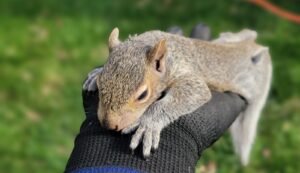
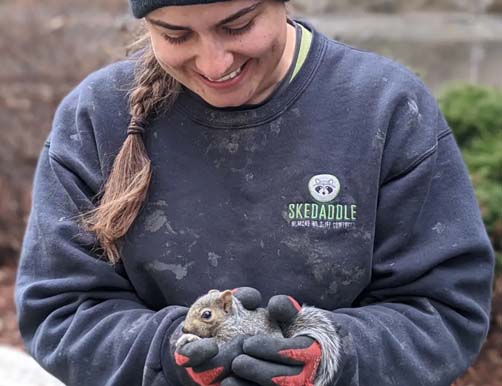
Homes near trees, green spaces, and water sources may see increased activity. Because babies are often present, removal requires careful, humane handling to keep families together while preventing re-entry. Early signs like scratching, repeated roof activity, or nesting debris should be addressed quickly to avoid further damage and contamination.
Oakville Summer Wildlife Protection for Lakeside and Suburban Homes
Oakville’s mix of lakeside neighbourhoods, ravines, mature trees and suburban properties can make summer a busy season for wildlife activity. Raccoons may explore rooflines, chimneys and attic vents, squirrels can use branches to access soffits, and skunks may dig under decks, sheds or porches. Birds and bats may use small exterior openings, while mice and rats can slip into garages or foundations through gaps that are easy to overlook. Homeowners may notice droppings, scratching sounds, strong odours, damaged vents or nesting materials. Preventing summer wildlife problems starts with securing waste bins, trimming branches, inspecting the exterior and sealing vulnerable entry points.
Skedaddle’s humane wildlife removal in Oakville helps homeowners protect their properties with professional inspection, safe removal, cleanup and exclusion. Our approach addresses both the animal activity and the conditions that allowed access, helping keep homes protected through summer and beyond.
Why Property Owners Trust Skedaddle for Wildlife Removal in Oakville
When wildlife moves in, you need a trusted partner with a proven, humane approach to get them out and keep them out.
- Local expertise: Our technicians understand wildlife pressures, from lakeshore neighbourhoods to newer subdivisions.
- Humane methods: We use safe, hands-on techniques designed to protect animals, families, staff, and pets.
- Guaranteed results: Our service includes removal, cleanup, restoration, and reinforced exclusion to help stop repeat entry.
- Award-winning service: Skedaddle is known for ethical wildlife handling and outstanding customer care in the communities it serves.
- Experienced team: Skedaddle has been providing home and business owners with humane wildlife solutions since 1989.
Skedaddle’s team combines local experience with a full-service approach. The location highlights humane removal for raccoons, squirrels, skunks, birds, mice, bats, and other urban wildlife, along with inspection, cleanup, restoration, and prevention services. The team also emphasizes tailored removal plans and hands-on techniques during spring and summer to keep mothers and babies together whenever young animals are present.
Our Proven Humane Wildlife Removal Process
We follow a thorough, three-step process that ensures a permanent solution to your wildlife problem, protecting both your property and the animals.
Step 1: Inspect & Remove
Every job begins with a comprehensive inspection of the home or business. Our technicians assess the roofline, soffits, vents, siding transitions, garages, decks, foundations, and attic or interior spaces to identify entry points, nesting areas, contamination, and damage. The goal is to confirm the species involved, understand how the animals are using the property, and build a removal plan around those findings. Once the problem is mapped out, we use humane, hands-on removal methods suited to the species. That may mean carefully removing babies from an attic, guiding adults to exit, or addressing bird, bat, rodent, or raccoon activity with techniques designed to solve the problem without unnecessary harm.
Step 2: Clear & Clean
Wildlife removal is only part of the solution. Animals often leave behind droppings, urine, nesting material, fur, food waste, and contaminated insulation. These materials can create odours, attract parasites, and spread bacteria through the affected space. In attic environments, damaged or soiled insulation can reduce energy efficiency and contribute to poor air quality throughout the building.
Skedaddle removes hazardous debris, clears contaminated materials, and sanitizes affected areas to reduce health risks and restore the space. This cleaning step is essential because it addresses the hidden impact of wildlife activity, not just the visible animal.
Step 3: Prevent & Protect
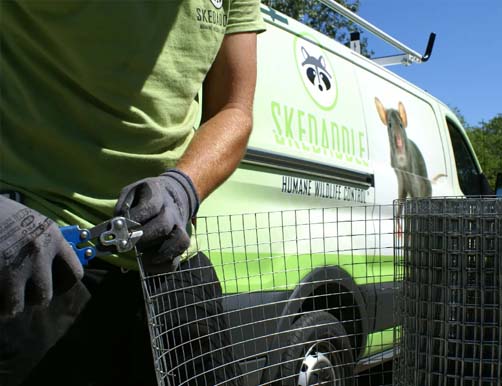
Long-term protection is built into the process. After removal and cleanup, Skedaddle seals and reinforces vulnerable entry points using durable materials, including heavy-gauge screening and wildlife-proof barriers where needed. Roof and vent openings, construction gaps, soffits, and other access points are secured based on the way each species enters.
This is especially important where both older homes and newer builds can offer easy access if minor vulnerabilities are left unaddressed. The result is a more complete, permanent solution designed to keep wildlife out and reduce the chance of another infestation.

Hidden Health Risks of Wildlife in Your Home or Business
Beyond property damage, wildlife in your home or business can create serious health and safety concerns for property owners. Animals living in attics, wall cavities, garages, crawl spaces, and rooflines often leave behind contamination that does not stay contained to one area. Droppings, urine, nesting debris, and damaged insulation can affect indoor air quality, create persistent odours, and increase the risk of illness or parasite exposure.
Rabies and direct contact risks: Wildlife should never be handled without proper training. In Oakville and across Halton, bats are the clearest public health concern because possible bat contact can require immediate follow-up with public health, even when a bite or scratch is not obvious. Rabies is a viral disease that affects the nervous system and must always be treated as a serious exposure risk.
Droppings, urine, and parasite exposure: Raccoon and rodent contamination can create hidden health hazards inside a property. Raccoon feces may carry roundworm, while Halton states that rats are carriers of disease and that illness can result from food or water contaminated by rat urine or droppings. These risks become more serious when wildlife activity continues in attics, basements, kitchens, storage areas, or commercial back-of-house spaces.
Attic contamination and air quality: Once insulation is soaked with urine, packed with droppings, or mixed with nesting debris, it can continue affecting the property long after the animals are gone. Bird and bat droppings are also associated with fungal hazards such as histoplasmosis because contaminated material can support the organism linked to infection risk when disturbed. That is why professional cleanup and restoration are such an important part of humane wildlife control.
Skedaddle’s service goes beyond removal. We help homeowners and businesses address the full problem with humane removal, cleanup, restoration, and long-term prevention designed to keep wildlife out for good.
Protect Your Property With Humane Wildlife Control
Skedaddle is committed to humane wildlife control and long-term protection for Oakville homeowners and businesses. From detailed inspection to removal, cleanup, restoration, and prevention, our process is designed to solve the problem completely and help keep it from coming back. Contact Skedaddle Humane Wildlife Control today for a consultation.
Oakville Insights
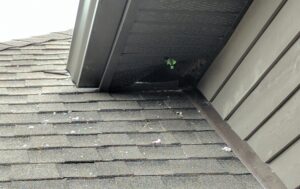
What That Damaged Soffit Could Mean for Your Oakville Home
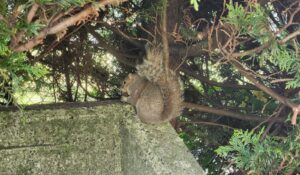
Why Oakville Homes Near Ravines Need a Different Wildlife-Prevention Plan